Research Article | | Peer-Reviewed

Optimizing Garlic Yield Through Furrow Irrigation Systems and Deficit Irrigation in Central Ethiopia, Tiyo District

Received: 6 March 2025     Accepted: 17 April 2025     Published: 14 May 2025
Views:       Downloads:
Abstract

Water scarcity presents a significant challenge to sustainable agriculture, especially in semi-arid regions like Ethiopia, where limited water availability intensifies dependence on efficient irrigation methods. This study assessed the impact of three furrow irrigation systems—Conventional Furrow Irrigation (CFI), Alternate Furrow Irrigation (AFI), and Fixed Furrow Irrigation (FFI)—combined with four levels of deficit irrigation (100%, 85%, 70%, and 55% of crop evapotranspiration, ETc) on garlic yield and water use efficiency (WUE) in Tiyo District, Central Ethiopia. A factorial randomized complete block design (RCBD) was employed with 12 treatment combinations and three replications. Results revealed that CFI at 85%ETc achieved the highest garlic yield among deficit treatments (82.68 q/ha), while AFI at 100%ETc provided a comparable yield with significantly reduced water use. The maximum irrigation water use efficiency (IWUE) of 31.52 kg/mm was observed under AFI70%ETc, followed closely by AFI100%ETc at 28.64 kg/mm. Crop water use efficiency (CWUE) was highest under CFI100%ETc at 26.35 kg/mm. Despite FFI being less effective due to uneven water distribution, AFI demonstrated consistent superiority in maintaining stable yields and maximizing WUE, especially under limited water conditions. The study concludes that AFI coupled with moderate deficit irrigation (100% or 85%ETc) offers a promising approach for improving garlic productivity and sustainable water management. These findings provide valuable insights for policymakers, researchers, and farmers seeking adaptive strategies to enhance crop performance in water-scarce environments.

Published in Journal of Water Resources and Ocean Science (Volume 14, Issue 3)
DOI 10.11648/j.wros.20251403.11
Page(s) 60-69
Creative Commons

This is an Open Access article, distributed under the terms of the Creative Commons Attribution 4.0 International License (http://creativecommons.org/licenses/by/4.0/), which permits unrestricted use, distribution and reproduction in any medium or format, provided the original work is properly cited.

Copyright

Copyright © The Author(s), 2025. Published by Science Publishing Group

Keywords

Garlic (Allium Sativum.), Furrow Irrigation Systems, Deficit Irrigation, Water Use Efficiency, Irrigation Water Use Efficiency (IWUE), Sustainable Water Resource Management, Ethiopia

1. Introduction
Agriculture is very crucial to Ethiopia’s economy contributing around 40% to the national GDP and providing employment to, approximately, 80% of the population Despite convincing contributions, the agricultural sector is faced with various challenges including erratic rainfall, low productivity, and ineffective water management practices. These challenges speak to an apparent demand for proper management of water considering the rising population together with climate change-induced changes in rainfall patterns.
In Ethiopia, 97.8% of irrigation systems are surface type, particular with furrow irrigation that suffers from the losses of water and low productivity . Conventional Furrow Irrigation or CFI is widely applied due to its simplicity and low cost; however, it suffers from inefficiency particularly due to over-irrigation, uneven distribution of water, evaporation, and runoff. Such inefficiency can severely affect crop growth and productivity, especially with garlic being a water sensitive crop.
Garlic (Allium sativum L.) is an important crop in Ethiopia for its culinary and medicinal purposes taking a wider cultivation in areas such as Tiyo district. Garlic, on the other hand, has a shallow root system, which makes it sensitive to alternating soil moisture conditions . Such inadequate irrigation causes the lack of proper bulb formation, crop yields and low WUE. Irrigation management practice is, therefore, useful in terms of enhancing yield while conserving water use.
Alternative irrigation strategies include Alternate Furrow Irrigation (AFI) and Fixed Furrow Irrigation (FFI) proposed to overcome CFI shortcomings. The AFI system is characterized by irrigation of alternate furrows, allowing every second furrow to dry out before the next irrigation. Water is saved, while the moisture content is kept sufficient for other furrows . As for FFI, water application is done throughout the scenario with specific furrows only watermelon being a sensitive crop.
Deficit irrigation (DI)'s emphasis increased mainly as a result of the study on the way to use water. Less than the total crop requirement of evapo-transpiration (ETc) for irrigation is applied, whereby crops withstand mild water stresses while retaining 85%-90% yield. Some researchers have shown that DI can increase irrigation water use efficiency (IWUE) while reducing water consumption, providing an invaluable resource for the areas where water is limited .
This study assesses the combined effects of different furrow irrigation systems (CFI, AFI, FFI) with five levels of deficit irrigation (100%ETc, 85%ETc, 70%ETc, and 55%ETc) on garlic yields and water use efficiency in Tiyo District, Central Ethiopia. By it, the aim is to produce practicable recommendations for improving sustainability in water management and garlic production that can be applicable in other regions with similar water constraints.
Agriculture in Ethiopia is characterized by rain-fed systems, putting it at great risk for fluctuation in the amount of rainfall received. One reason for low efficiencies in water use is that there is little or no proper irrigation infrastructure, and dependence on surface irrigation is high, actually leading to water wastage and also low crop yields. Garlic is very sensitive to water stress when economically, most notably during the bulb formation stage. And the inefficiency of the irrigation systems, particularly with conventional surface furrow irrigation being used, negates this potential for the increased productivity of garlic in the region.
The question of planting crops without abandoning irrigation is of optimum use of water with regards to garlic yield. It is unfortunate that while furrow irrigation alternatives such as AFI and FFI are aimed at reducing water use, almost no research has been made on their combined effects with deficit irrigation strategies on garlic production in Ethiopia. Hence, the study shall assess the interactive effects of different furrow irrigation systems and DI levels on garlic yields and water use efficiency and thus develop recommendations on sustainable water management to such water-constrained watersheds.
2. Materials and Methods
2.1. Description of the Study Area
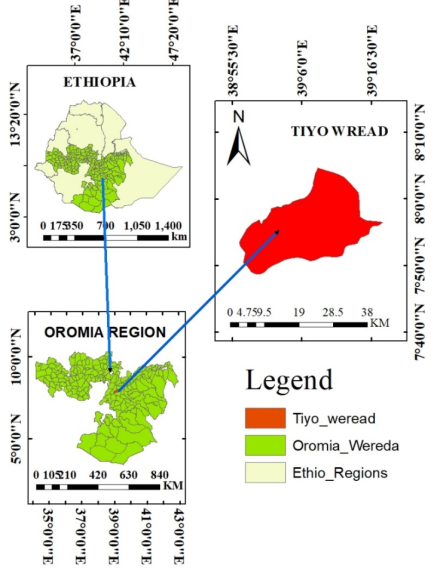
The Experiment was conducted at kulumsa Agricultural Research Center, which is 170 km far from Addis Ababa. Geographically, the center is situated between 8° 0‟ to 8o 2‟ N latitude and 39° 7‟ to 39° 10‟ E longitude at an altitude ranging from 1980 to 2230 masl (Figure 1) at east Arsi Zone Tiyo woreda.
Figure 1. Location of the study site.
2.2. Treatments and Experimental Design
There are two factors in this experiment: furrow irrigation systems and levels of application of irrigation. Within the furrow irrigation systems were: a) Alternative Furrow Irrigation (AFI); b) Fixed Furrow Irrigation (FFI); and c) Conventional Furrow Irrigation (CFI). Within the irrigation levels were: 100%ETc; 85%ETc; 70%ETc; and 55%ETc. The combinations of these two factors are shown in Table 2, and the treatment combinations gave rise to a total of 12 treatments, as shown in Table 2. The experiment was laid in a factorial randomized complete block design (RCBD) with three replications (Table 1).
Their plots and replications were separated by a buffer zone of 2m for canals carrying no irrigation water and 2.5 m for supply canals carrying irrigation water supply primarily to eliminate the influence from lateral movement of water and 1m between plots.
Table 1. Treatment combinations.

Irrigation Level

Furrow Irrigation System

AFI

FFI

CFI

100%Etc

T1

T5

T9

85%Etc

T2

T6

T10

70%Etc

T3

T7

T11

55%Etc

T4

T8

T12

Table 2. Experimental treatments.

Treatment

Designation

Description

T1

AFI100%ETc

Alternative furrow irrigation with 100%ETc

T2

AFI85%ETc

Alternative furrow irrigation with 85%ETc

T3

ALI70%ETc

Alternative furrow irrigation with 70%ETc

T4

ALF55%ETc

Alternative furrow irrigation with 55%ETc

T5

FFI100%ETc

Fixed furrow irrigation with 100%ETc

T6

FFI85%ETc

Fixed furrow irrigation with 85%ETc

T7

FFI70%ETc

Fixed furrow irrigation with 70%ETc

T8

FFI55%ETc

Fixed furrow irrigation with 55%ETc

T9

CFI100%ETc

Convectional furrow irrigation with 100%ETc

T10

CFI85%ETc

Conventional irrigation with 85%ETc

T11

CFI70%ETc

Conventional irrigation with 70%ETc

T12

CFI55%ETc

Conventional irrigation with 55%ETc

2.3. Agronomic Data Collection
Relevant agronomic data were recorded during the experiment period. Five randomly selected plants from the central three rows per plot excluding the border rows and border plants were taken as a sample. Plant height (cm), Leaf number, Leaf length (cm), Bulb height (cm), Bulb diameter (cm Marketable bulb yield, Unmarketable bulb yield (UMC), Total bulb yield (kg ha-1), and Days to maturity.
2.4. Water Use Efficiency
Water use efficiency could be determined based on the ratio of yield of marketable yield to the crop depth of water and irrigation depth of water used from germination to harvest, according to the following formula.
IWUE=YIWRandCWUE=YCWR
2.5. Statistical Analysis
The collected data were statistically analyzed appropriately for RCBD. When the data have shown statistical differences among treatments, mean separation was done using the least significant difference (LSD). The R statistical software was used for the analysis of variance. Correlation analysis was performed to obtain the correlation coefficients among the collected data.
3. Results and Discussion
3.1. Soil Sample Analysis
The results of soil sample analyses on soil physical and chemical properties are given in Table 3 and Table 4.
3.1.1. Soil Physical Characteristics
According to the laboratory study, the experimental plot's particle size distribution ranged between 32% and 69% for the clay content, 17% and 20% for the sand content, and 34% and 44% for the silt content (Table 3.). As a result, it is discovered that the soil textural classes are clay for soil depths of 20 to 40 cm and silty clay loam for soil depths of 0 to 20 cm and 40 to 60 cm. The experimental site's bulk density varied somewhat and got higher as depth climbed. With a mean bulk density of 1.19 gm/cm3, the bulk density ranged from 1.13 to 1.26 gm/cm3. With a mean value of 187.4 mm/m, the TAW fluctuated within a narrow range of 185.7 to 188.7 mm/m.
Table 3. Soil physical properties of the experimental area.

Soil depth (cm)

Soil moisture content

Bulk density (gm/cm3)

TAW (mm/m)

Particle size distribution (%)

Textural class

FC (%v)

PWP (%v)

Clay

Sand

Silt

0 - 20

50.83

32.26

1.13

185.7

36.9

19.6

43.5

Silty clay loam

20 - 40

52.21

33.44

1.18

187.7

68.7

17.6

13.7

Clay

40 - 60

51.85

32.98

1.26

188.7

32.4

19.6

48.0

Silty clay loam

Mean

51.63

32.89

1.19

187.4

46.0

18.9

35.1

Clay

3.1.2. Soil Chemical and Water Quality Analysis
The pH of the soil in the experimental field was found to be almost neutral and to range very narrowly between 7.0 and 7.1. An essential metric for determining the acidity or alkalinity of soil is its pH, which expresses the concentration of hydrogen ions in the soil. A pH range of 6.0 to 8.0 is ideal for garlic growth . Through a 60 cm soil profile, the soil exhibited a CEC of around 12.1 me/100gm of soil, indicating a poor fertility state. and a garlic threshold value of 1.2 dS/m, which is below the typical ECe of 0.27 dS/m . The average values of the soil's OM and OC contents were 1.82% and 1.04%, respectively.
The laboratory results of the irrigation water quality indicate that the pH value was 7.5 and the ECw value was 0.69 dS m-1 (Table 4). According to , irrigation water is classified in terms of pH as low (below 7), slight to moderate (7-8), and severe (above 8). Based on this classification, the characteristic of the irrigation water in the study area was found slight to moderate (Table 4).
Bauder reported that irrigation water quality in terms of salinity hazard has four categories: ≤ 0.75 dS m-1 none; 0.76 - 1.5 dS m-1 some; 1.51 - 3.0 dS m -1 moderate and ≥3.0 dS m-1 severe . Based on the above categories the irrigation water quality of the study area was classified as none.
Table 4. The soil and water chemical analysis.

Soil depth (cm)

pH

ECe (dS/m)

OC (%)

OM (%)

CEC (me/100gm)

0 - 20

7.1

0.28

1.2

2.1

14.6

20 - 40

7.1

0.25

1.1

1.89

11.8

40 - 60

7.0

0.29

0.9

1.6

9.8

Average

7.1

0.27

1.1

1.82

12.1

Irrigation water

7.5

0.69

3.2. Garlic Water and Irrigation Water Requirements
The daily ETo was generated using CROPWAT 8.0 for windows using the Kc values as derived below (Allen et al., 1998), based on the daily weather data acquired from the Kulumsa meteorological station throughout the growth season from February 23 to July 15, 2022. It was discovered that the seasonal crop water needs were 374.35 mm and the irrigation water requirements were 298.5 mm, respectively. Table 5. displays the net and gross depths of water required for the treatments under full irrigation. Table 5. displays the gross depth of irrigation applied for each treatment during the growth season. The gross irrigation need applied under each treatment ranged from 135.45 to 497.52 mm per season, based on a 60% irrigation application efficiency. Under was the least amount of gross irrigation water applied. irrigation water was delivered. And hence, the least water used to produce the garlic yield from AFI and FFI treatments was 135.45 mm.
Table 5. Crop water and irrigation water requirements for the control treatment.

Date

ETc (mm)

RF (mm)

Effective rainfall (mm)

NIR (mm)

GIR (mm)

26-Feb

3.9

2

8-Mar

26.24

31.1

51.8

18-Mar

49

29.1

19-Mar

4.7

2.5

20-Mar

18

10.5

23-Mar

9.8

5.6

6-Apr

84.34

40.54

67.57

12-Apr

4.5

2.37

13-Apr

25.3

14.85

15-Apr

3.5

1.77

16-Apr

2.3

1.05

17-Apr

0.3

0

23-Apr

3.9

2.01

24-Apr

3.3

1.65

25-Apr

4.5

2.37

26-Apr

0.2

0

30-Apr

82.33

44.78

74.6

5-May

43.56

44.78

74.6

13-May

44.62

44.78

74.6

22-May

44.82

44.78

74.6

3-Jun

48.43

47.78

79.6

Total

374.35

133.2

75.77

298.5

497.5

Table 6. Depth of irrigation water application (mm).

Date

AFI/FFI 100%ETc

AFI/FFI 85%ETc

AFI/FFI 70%ETc

AFI/FFI 55%ETc

CFI 100%ETc

CFI 85%ETc

CFI 70%ETc

CFI 55%ETc

8-March

25.90

22.01

18.13

14.24

51.80

44.03

36.26

28.49

6-April

33.79

28.72

23.65

18.58

67.57

57.44

47.30

37.17

30-April

37.32

31.72

26.12

20.52

74.63

63.44

52.24

41.05

5-May

37.32

31.72

26.12

20.52

74.63

63.44

52.24

41.05

13-May

37.32

31.72

26.12

20.52

74.63

63.44

52.24

41.05

22-May

37.32

31.72

26.12

20.52

74.63

63.44

52.24

41.05

3-June

37.32

31.72

26.12

20.52

79.63

63.44

52.24

41.05

Total

246.27

209.33

172.39

135.45

497.52

418.65

344.77

270.89

3.3. Growth Parameters: Plant Height, and Leaf Length
Plant Height
It was revealed by the analysis of variance that a very significant difference (P<0.05) exists among the different irrigation systems and irrigation levels applied on plant heights (Table 7). The maximum plant height of 50.53 cm was obtained from CFI with 100%ETc application, and it showed no significant difference with CFI85%ETc and CFI70%ETc applications. Among the deficit irrigation regimes, the application of 85%ETc provided the tallest plant among the deficit irrigations, and it shows no significant difference against CFI70%ETc, AFI100%ETc, and FFI100%ETc applications conjunctively.
Garlic plants irrigated under Alternate Furrow Irrigation (AFI) obtained a significantly greater plant height than that of those irrigated through Conventional Furrow Irrigation (CFI) and Fixed Furrow Irrigation (FFI). The improved plant height under AFI is likely due to its ability to maintain the requisite soil moisture and reduce waterlogging, thus acting favorably towards root and shoot development .
Leaf Length
Application of furrow irrigation systems and deficit irrigation levels had significant (P<0.05) effects on garlic leaf length. A negative trend in leaf length was observed with decreasing irrigation levels. CFI55%ETc produced the longest leaf at 44.27cm and was not statistically different from CFI100%ETc, CFI85%ETc, and FFI85%ETc treatments (Table 7). The lowest leaf length of 36.73cm was observed with the deficit irrigation level of 70%ETc under FFI, and it was statistically similar to FFI55%ETc, FFI100%ETc, and with all other deficit irrigation treatments under AFI and CFI70%ETc treatments.
The leaf length followed a similar trend, AFI treatments having longer leaf lengths than CFI and FFI. Alternating dry and wet furrows under AFI might have improved root activity and nutrient uptake, thus leading to better vegetative growth .
FFI consistently produced a lower plant height and leaf length compared to CFI which produced medium ones-the reason being uniform water application pressure. Reduced water supply in the FFI treatments probably led to stress, which limited photosynthesis and vegetative growth.
3.4. Yield Parameters: Bulb Yield, Bulb Diameter, and Weight Bulb
Bulb yield,
The analysis of variance revealed that the total bulb yield of garlic was significantly affected (p<0.05) by the furrow irrigation systems and irrigation levels (Table 7). The control treatment produced the highest yield of 98.62 qt/ha, which was significantly higher than any other treatment. Among the deficit irrigation applications, CFI85%ETc yielded the highest total bulb yield of 82.68 qt/ha but did not differ significantly from the CFI70%ETc and AFI100%ETc applications. The lowest bulb yield was recorded at 42.75 qt/ha .
Nevertheless, AFI100%ETc achieved nearly equivalent yields while using less water, emphasizing that it has a possibility for improving water use efficiency without significant yield loss On the other hand, FFI55%ETc had the lowest yield owing to inadequate and uneven water distribution.
Bulb Diameter
The bulb size was measured to assess the quality of garlic. Variance analysis has shown that the furrow irrigation system and the irrigation levels significantly (P < 0.05) influenced bulb diameter (Table 7). Maximum bulb diameter recorded was 48.73 mm, which came from CFI 100% ETc application, and was not significantly different from CFI at 85% ETc and 70% ETc; AFI at 100% ETc, 85% ETc, and 70% ETc; and FFI at 100% ETc applications. However, the smallest bulb diameter of 40.67 mm was recorded from FFI and shows no differences with FFI at 85% ETc and 55% ETc; AFI at 55% ETc and 70% ETc; and CFI at 55% ETc and 70% ETc applications.
This agrees with the recommendations given by Bayu Enchalew et al. (2016) and by Yemane Mebrahtu et al. (2018) stating the larger plant photosynthetic areas such as plant height and leaf number due to elevated irrigation levels led to increased assimilate partitioning to the bulbs, hence an increase in bulb diameter. The findings are also consistent with that of Kannan Narayanan and Mulugeta Mohammed Seid, (2015) who stated that the highest water application plots were producing harvests with the highest percentage of larger bulbs while those with limited water supply produced smaller bulbs. Further, Gebeyehu Tegenu et al. (2019) asserted that bulb diameter increased with the amount of water applied in irrigation. In the same manner, this indicates that transpiration and rates of photosynthesis and growth were stalled by water stress, since the stressed plants produced bulbs of smaller sizes. A study conducted by also confirmed the bulb diameter to have a growing tendency with increasing levels of irrigation application.
Bulb weight
Bulb weight from treatments with furrow irrigation systems and irrigation levels was not significantly affected (Table 4) according to the analysis of variance. The highest bulb weight (43.13gm) was recorded from the application of CFI100%ETc (Table 7). Bulb weights from CFI85%ETc, and CFI70ETc, AFI100%ETc, and AFI85%ETc, and FFI100%Etc were better than or around equal to the average bulb weights of the treatments. The lowest average bulb weight of 30.2mm was recorded from the application of FFI55%etc, while the bulb weight obtained from the application of AFI55%Ec was found to be within a narrow range, the minimum weight recorded in the application of FFI55%etc.
In the same way, observed significant increase in average bulb weight at 120%ETc irrigation levels. Average bulb weight responded to irrigation water increment. This increment in bulb weight was probably caused by taller plants represented by a significant increase in the number of leaves for the better synthesis and transportation of assimilates sourced into the sinks .
Further indicated by the large bulb weights and diameters of the former treatments that maintained adequate soil moisture during critical growth increments, including bulb initiation and development, those phases are especially at risk from water stress .
Table 7. Effect of furrow irrigation system and irrigation level on garlic plant growth and yield parameter.

Treatments

LL (cm)

Plant height (cm)

BD (mm)

WB (gm)

BY (Kg/ha)

CF100%ETc

43.20ab

50.53a

48.731a

43.1

9862.4a

CFI85%ETc

42.13abc

48.47ab

46.13abcd

41.3

8268.1b

CFI70%ETc

39.73bcd

48.07ab

44.20abcde

40.8

7647.3b

CFI55%ETc

44.27a

44.07cdef

43.33bcde

36.0

5530.9d

AFI100%ETc

38.60cd

46.53bcd

47.93ab

40.1

7125.2bc

AFI85%ETc

38.87cd

43.07ef

46.00abcd

39.9

5686.1cd

AFI70%ETc

37.20d

42.27ef

44.33abcde

32.7

5488.5d

AFI55%ETc

36.33d

41.27ef

42.73cde

31.1

4289.2d

FFI100%ETc

39.67bcd

47.20bc

47.40abc

39.9

5516.8d

FFI85%ETc

41.93abc

44.53cde

42.67cde

34.9

4797.2d

FFI70%ETc

36.73d

43.33def

40.67e

33.4

4557.3d

FFI55%ETc

39.67bcd

40.80f

42.00de

30.2

4275.1d

Mean

39.86

45.01

44.68

36.9

6087.01

CV

6.34

4.32

6.61

18.04

14.59

LSD (0.05)

4.28

3.29

5.00

NS

1504.1

NB: Figures carrying the same letters are not significantly different from each other
3.5. Water Use Efficiency
Efficient use of water is a critical consideration in regions with limited water resources. This study evaluated water use efficiency (WUE) through Crop Water Use Efficiency (CWUE) and Irrigation Water Use Efficiency (IWUE) metrics.
3.5.1. Irrigation Water Use Efficiency (IWUE)
In short, the analysis of variance indicated that furrow irrigation systems and irrigation levels of deficit had a significant (P<0.05) impact on IWUE as shown in Table 8. The highest IWUE recorded under AFI with 70%ETc irrigation application reaches the maximum of 31.52kg mm-1, which shows no significant difference with AFI100%ETc, AFI85%ETc, AFI55%ETc, FFI70%ETc, or FFI55%ETc. Among these deficits, it comes out that AFI100%ETc gave the best garlic yields of 71.25 qt/ha and saved 50% of the required irrigation water. Thus, for garlic in the Kulumsa climate, the IWUE of 28.64 kg mm-1 is high efficiency.
These findings were reflected in their conclusions by that AFI improved crop water use efficiency for the crop under study. In AFI, some furrows are irrigated and adjacent furrows are not, while the WUE comes up by reduced evaporation from the soil surface, the use of such irrigation systems results in a bonus of having lower yields despite having higher WUE . When there was not sufficient water to fully irrigate, the yields of garlic under AFI were superior to those which were fully cut off.
In general, IWUE was affected by crop yield potential, irrigation method, estimation and measurement of ET, and crop environment. It was reported that irrigation water could be conserved while maintaining yields under limited water conditions as this crop is sensitive to drought stress.
The lowest irrigation water use efficiency of 19.55kg mm-1 was recorded under CFI practice with 85%ETc deficit irrigation application, which did not show a significant difference from the control (100%ETc) irrigation application, CFI70%ETc, CFI55%ETc, FFI100%ETc, or FFI85%ETc applications.
3.5.2. Crop Water Use Efficiency (CWUE)
The variance analysis of variance has indicated that the furrow irrigation systems and deficit irrigation levels had a significant effect on CWUE at P<0.05. The highest CWUE of 26.35kg mm-1 as shown in Table 8. was achieved under CFI with 100%ETc irrigation applications and had a significant difference from all other efficiencies. Among the deficit irrigation, CFI with 85%ETc application gave the highest CWUE of 22.09kg mm-1 and shows no significant differences with CFI70%ETc and AFI100%ETc applications. The water saved from the CFI70%ETc application was only one-third of the CWR and the yield reduction from the AFI85%ETc application was about 6 quintals. In contrast, the water saved under AFI is 50% and the yield reduction from the CFI85%ETc application is over 11 quintals. Hence, considering CWUE of 19.03 kg mm-1it can be observed that with 50% water saved and half of the yield obtained under AFI (71.25 q/ha) could be produced. Similarly, it can be observed that an IWUE of 28.64 kg mm-1 will be considered optimal.
These results are in harmony with the findings of [13, 15] who reported that the lower reduction in the yield of AFI and higher CWUE could be due to the better distribution of its roots on both sides from the ridge, which can increase water and fertilizer uptake by plants. The results showed that alternative drying of the root zone outperformed the fixed drying of the root zone. Results showed that AFI increased CWUE for garlic relative to CFI. This result agreed with , who reported that deficit irrigations increased the water use efficiency of crops. Equally, showed that crop water use efficiency is higher at lower levels of available soil moisture.
Table 8. Effect of furrow irrigation and irrigation level on garlic water use efficiency.

Treatment

Bulb yield (Kg/ha)

CWR (mm)

IWR (mm)

CWUE (Kg/mm)

IWUE (Kg/mm)

CF100%ETc

9862.4a

374.35

497.52

26.35a

19.82c

CFI85%ETc

8268.1b

374.35

418.65

22.09b

19.55c

CFI70%ETc

7647.3b

374.35

344.77

20.43b

21.96bc

CFI55%ETc

5530.9d

374.35

270.89

14.76d

20.21c

AFI100%ETc

7125.2bc

374.35

246.27

19.03bc

28.64a

AFI85%ETc

5686.1cd

374.35

209.33

15.19cd

26.89ab

AFI70%ETc

5488.5d

374.35

172.39

14.66d

31.52a

AFI55%ETc

4289.2d

374.35

135.45

11.46d

31.35a

FFI100%ETc

5516.8d

374.35

246.27

14.74d

22.18bc

FFI85%ETc

4797.2d

374.35

209.33

12.82d

22.69bc

FFI70%ETc

4557.3d

374.35

172.39

12.17d

26.17ab

FFI55%ETc

4275.1d

374.35

135.45

11.42d

31.25a

Mean

6087.01

374.35

254.89

16.26

25.19

CV

14.59

14.59

13.87

LSD (P = 0.05)

1504.1

NS

NS

4.018

5.917

NB: Figures carrying the same letters are not significantly different from each other
4. Summary
Efficient water management is critical for garlic production, particularly in semi-arid regions like Ethiopia. This study evaluated the effects of furrow irrigation systems (CFI, AFI, FFI) and deficit irrigation levels (100%ETc, 85%ETc, 70%ETc, and 55%ETc) on garlic growth, yield, and water use efficiency.
Key Findings:
1) AFI consistently outperformed other systems in WUE metrics, with the highest IWUE observed at AFI70%ETc.
2) CFI100%ETc achieved the highest garlic bulb yield, while AFI provided the best balance of yield and water savings.
3) FFI showed poor performance due to uneven water application, highlighting its limitations in water-scarce regions.
These findings demonstrate that adopting AFI with moderate deficit irrigation can significantly enhance garlic production while conserving water resources. Such strategies are essential for achieving sustainable agriculture in Ethiopia.
5. Conclusion
This study highlights the potential of improved furrow irrigation systems and deficit irrigation strategies for sustainable garlic production in Ethiopia. The main findings are:
1) Alternate Furrow Irrigation (AFI) demonstrated superior performance in water use efficiency (WUE) and yield stability, particularly under 100%ETc and 85%ETc treatments.
2) While CFI100%ETc achieved the highest garlic yield, AFI100%ETc provided comparable yields with significantly less water usage.
3) FFI underperformed in most parameters due to uneven water distribution and inadequate soil moisture in dry furrows.
These results confirm that AFI and moderate deficit irrigation strategies offer practical solutions for improving garlic production in water-scarce regions, ensuring sustainability without significant yield losses.
6. Recommendations
Based on the study findings, the following recommendations are proposed:
1) Adopt Alternate Furrow Irrigation (AFI100%ETc):
AFI systems are highly effective in improving water use efficiency while maintaining stable yields. Farmers in water-scarce regions should prioritize this system to optimize irrigation practices.
2) Invest in Farmer Training:
Training programs should be implemented to educate farmers on the benefits of AFI and deficit irrigation strategies. These programs should also teach proper scheduling and monitoring of irrigation.
3) Expand Research to Other Crops:
Similar studies should be conducted for other water-sensitive crops to generalize the benefits of these systems across various agricultural practices.
Abbreviations

AFI

Alternative Furrow Irrigation

CFI

Conventional Furrow Irrigation

FFI

Fixed Furrow Irrigation

WUE

Water Use Efficiency

IWUC

Irrigation Water Use Efficiency

CWUE

Crop Water Use Efficiency

DI

Deficit Irrigation

Author Contributions
Abu Dedo Ilmi is the sole author. The author read and approved the final manuscript.
Conflicts of Interest
The authors declare no conflicts of interest.
References
[1] Ayele, T., Mesfin, T., & Kebede, W. (2020). "Impact of deficit irrigation on vegetable yields in Ethiopia." Journal of Agricultural Water Management, 228, 105-112.
[2] Ayele, T., Workneh, T., & Assefa, H. (2020). Evaluation of alternative furrow irrigation systems for water use efficiency in Ethiopia. Journal of Agricultural Sciences, 12(3), 45-56.
[3] Bauder, T. A., Waskom, R. M., Sutherland, P. L., & Davis, J. G. (2014). Irrigation Water Quality Criteria. Colorado State University Extension.
[4] FAO. (2019). Ethiopia Agricultural Development Strategy. Food and Agriculture Organization of the United Nations: FAO.
[5] Food and Agriculture Organization (FAO). (2019). "Ethiopia’s Agricultural Economy: Challenges and Opportunities." Rome, Italy.
[6] Gebremariam, H., Berhane, G., & Alemayehu, E. (2019). "Deficit irrigation strategies for improving water productivity in horticultural crops." Ethiopian Journal of Agricultural Sciences, 29(3), 245-256.
[7] Gebremariam, M., Tesfaye, K., & Alemayehu, D. (2019). Deficit irrigation: A tool for improving water productivity in arid regions. Ethiopian Journal of Water Resources, 11(2), 88-104.
[8] Nikus, O., & Mulugeta, F. (2010). Onion Seed Production Techniques: A Manual for Extension Agents and Seed Producers. Asella, Ethiopia: FAO-CDMDP.
[9] Kebede, A., Mesfin, S., & Lemma, G. (2018). Impact of irrigation systems on garlic production in Ethiopia. Agricultural Water Management Journal, 23(4), 201-215.
[10] Kebede, T., Alemayehu, M., & Tesfaye, G. (2018). "Water stress impacts on garlic (Allium sativum L.) growth and yield: Evidence from Ethiopia." Journal of Horticultural Science and Biotechnology, 93(4), 412-420.
[11] Ministry of Agriculture (MoA). (2021). "Irrigation Practices in Ethiopia." Addis Ababa, Ethiopia.
[12] Ministry of Agriculture (MoA). (2021). Irrigation Development and Management Strategy for Ethiopia. Addis Ababa: Ministry of Agriculture.
[13] Ayana, A. (2011). Water use efficiency under different deficit irrigation levels in onion. African Journal of Agricultural Research, 6(2), 301-307.
[14] Kloss, S. et al. (2015). Impact of water stress on crops and water use efficiency in furrow irrigation systems. Water Resources Management, 29(4), 1205-1218.
[15] Abd El-Hady, M. & Eldardiry, E. (2016). Water productivity under different furrow irrigation systems in arid conditions. Agricultural Water Management, 178, 280-287.
[16] Tadesse Mugoro, A. (2020). Improving crop water use efficiency through deficit irrigation: A case study in garlic. Irrigation and Drainage Systems Engineering, 9(2).
[17] Abdelkhalik, A., Pascual-Seva, N., & Sánchez-Blanco, M. J. (2019). Deficit irrigation and organic fertilization improve water use efficiency in garlic. Agricultural Water Management, 223, 105689.
[18] Birhanu, L. (2020). Irrigation scheduling and its impact on water use efficiency and crop productivity. Journal of Water and Climate Change, 11(2), 483-494.
[19] Rowell, D. L. (1994). Soil Science: Methods and Applications. Longman Scientific and Technical.
[20] Demirtas, M. N. & Serhat, T. (2009). Effect of irrigation regimes on yield and quality of garlic. Acta Horticulture, 826, 109-116.
[21] Smith, R., Cahn, M., & Hartz, T. (2011). Nutrient and salinity management in garlic production. University of California Extension Publications.
[22] Bryan, R., Bauder, T., & Waskom, R. (2007). Irrigation water quality criteria. Colorado State University Extension, Fact Sheet No. 0.506.
[23] Ilmi, A. D., Kebede, A., & Hordofa, T. (2025). Effect of Water Application Level on Garlic (Allium sativum L.) Under Different Furrow Irrigation Systems, in Tiyo District, Central Ethiopia. 9(1), 77-99.
Cite This Article
  • APA Style

    Ilmi, A. D. (2025). Optimizing Garlic Yield Through Furrow Irrigation Systems and Deficit Irrigation in Central Ethiopia, Tiyo District. Journal of Water Resources and Ocean Science, 14(3), 60-69. https://doi.org/10.11648/j.wros.20251403.11

    Copy | Download

    ACS Style

    Ilmi, A. D. Optimizing Garlic Yield Through Furrow Irrigation Systems and Deficit Irrigation in Central Ethiopia, Tiyo District. J. Water Resour. Ocean Sci. 2025, 14(3), 60-69. doi: 10.11648/j.wros.20251403.11

    Copy | Download

    AMA Style

    Ilmi AD. Optimizing Garlic Yield Through Furrow Irrigation Systems and Deficit Irrigation in Central Ethiopia, Tiyo District. J Water Resour Ocean Sci. 2025;14(3):60-69. doi: 10.11648/j.wros.20251403.11

    Copy | Download

  • @article{10.11648/j.wros.20251403.11,
      author = {Abu Dedo Ilmi},
      title = {Optimizing Garlic Yield Through Furrow Irrigation Systems and Deficit Irrigation in Central Ethiopia, Tiyo District
    },
      journal = {Journal of Water Resources and Ocean Science},
      volume = {14},
      number = {3},
      pages = {60-69},
      doi = {10.11648/j.wros.20251403.11},
      url = {https://doi.org/10.11648/j.wros.20251403.11},
      eprint = {https://article.sciencepublishinggroup.com/pdf/10.11648.j.wros.20251403.11},
      abstract = {Water scarcity presents a significant challenge to sustainable agriculture, especially in semi-arid regions like Ethiopia, where limited water availability intensifies dependence on efficient irrigation methods. This study assessed the impact of three furrow irrigation systems—Conventional Furrow Irrigation (CFI), Alternate Furrow Irrigation (AFI), and Fixed Furrow Irrigation (FFI)—combined with four levels of deficit irrigation (100%, 85%, 70%, and 55% of crop evapotranspiration, ETc) on garlic yield and water use efficiency (WUE) in Tiyo District, Central Ethiopia. A factorial randomized complete block design (RCBD) was employed with 12 treatment combinations and three replications. Results revealed that CFI at 85%ETc achieved the highest garlic yield among deficit treatments (82.68 q/ha), while AFI at 100%ETc provided a comparable yield with significantly reduced water use. The maximum irrigation water use efficiency (IWUE) of 31.52 kg/mm was observed under AFI70%ETc, followed closely by AFI100%ETc at 28.64 kg/mm. Crop water use efficiency (CWUE) was highest under CFI100%ETc at 26.35 kg/mm. Despite FFI being less effective due to uneven water distribution, AFI demonstrated consistent superiority in maintaining stable yields and maximizing WUE, especially under limited water conditions. The study concludes that AFI coupled with moderate deficit irrigation (100% or 85%ETc) offers a promising approach for improving garlic productivity and sustainable water management. These findings provide valuable insights for policymakers, researchers, and farmers seeking adaptive strategies to enhance crop performance in water-scarce environments.
    },
     year = {2025}
    }
    

    Copy | Download

  • TY  - JOUR
    T1  - Optimizing Garlic Yield Through Furrow Irrigation Systems and Deficit Irrigation in Central Ethiopia, Tiyo District
    
    AU  - Abu Dedo Ilmi
    Y1  - 2025/05/14
    PY  - 2025
    N1  - https://doi.org/10.11648/j.wros.20251403.11
    DO  - 10.11648/j.wros.20251403.11
    T2  - Journal of Water Resources and Ocean Science
    JF  - Journal of Water Resources and Ocean Science
    JO  - Journal of Water Resources and Ocean Science
    SP  - 60
    EP  - 69
    PB  - Science Publishing Group
    SN  - 2328-7993
    UR  - https://doi.org/10.11648/j.wros.20251403.11
    AB  - Water scarcity presents a significant challenge to sustainable agriculture, especially in semi-arid regions like Ethiopia, where limited water availability intensifies dependence on efficient irrigation methods. This study assessed the impact of three furrow irrigation systems—Conventional Furrow Irrigation (CFI), Alternate Furrow Irrigation (AFI), and Fixed Furrow Irrigation (FFI)—combined with four levels of deficit irrigation (100%, 85%, 70%, and 55% of crop evapotranspiration, ETc) on garlic yield and water use efficiency (WUE) in Tiyo District, Central Ethiopia. A factorial randomized complete block design (RCBD) was employed with 12 treatment combinations and three replications. Results revealed that CFI at 85%ETc achieved the highest garlic yield among deficit treatments (82.68 q/ha), while AFI at 100%ETc provided a comparable yield with significantly reduced water use. The maximum irrigation water use efficiency (IWUE) of 31.52 kg/mm was observed under AFI70%ETc, followed closely by AFI100%ETc at 28.64 kg/mm. Crop water use efficiency (CWUE) was highest under CFI100%ETc at 26.35 kg/mm. Despite FFI being less effective due to uneven water distribution, AFI demonstrated consistent superiority in maintaining stable yields and maximizing WUE, especially under limited water conditions. The study concludes that AFI coupled with moderate deficit irrigation (100% or 85%ETc) offers a promising approach for improving garlic productivity and sustainable water management. These findings provide valuable insights for policymakers, researchers, and farmers seeking adaptive strategies to enhance crop performance in water-scarce environments.
    
    VL  - 14
    IS  - 3
    ER  - 

    Copy | Download

Author Information
  • Abstract
  • Keywords
  • Document Sections

    1. 1. Introduction
    2. 2. Materials and Methods
    3. 3. Results and Discussion
    4. 4. Summary
    5. 5. Conclusion
    6. 6. Recommendations
    Show Full Outline
  • Abbreviations
  • Author Contributions
  • Conflicts of Interest
  • References
  • Cite This Article
  • Author Information